WHAT IS DIABETES?
Diabetes is characterized by high blood sugar. When you eat carbohydrates, they break down into sugar, also called glucose, in your body, and increase your blood sugar. Insulin helps to lower your blood sugar. It acts as a “key” to let glucose into your cells to give your body energy. If you have diabetes, your body either does not produce enough insulin, or the insulin produced does not work as well to let glucose into your cells to give you energy. This causes blood sugar levels to stay high.
DIFFERENT TYPES
Type 1 Diabetes:
- Autoimmune disease
- Your body attacks the cells that produce insulin, which causes no insulin to be produced. This causes blood sugar levels to stay high because insulin is not available to let the glucose into your cells.
Type 2 Diabetes:
- Factors such as being overweight, obese, not being physically active, and poor nutrition can increase the risk of developing type 2 diabetes
- Being older than 45, having a family history of diabetes, and having a history of gestational diabetes or PCOS can increase your risk for type 2 diabetes
- Can be managed by nutrition and lifestyle factors such as carbohydrate counting, monitoring portion sizes, physical activity, achieving and maintaining a healthy BMI
Gestational Diabetes (GDM)
- Occurs only during pregnancy
- Can be managed with diet and exercise
- Can impact the baby and mom
- GDM increases the risk of having a baby larger than average and increases their risk of becoming obese and developing type 2 diabetes later in life. GDM has the same complications for mom as type 2 diabetes.
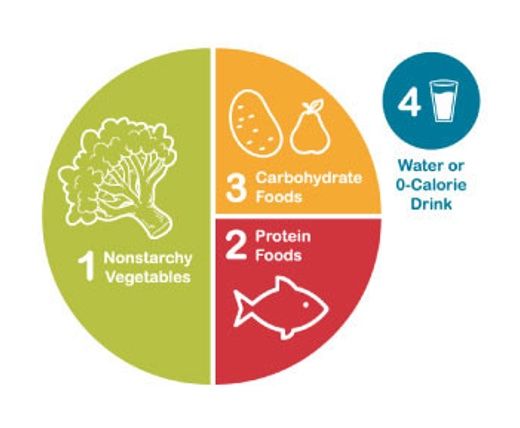
EATING FOR DIABETES - FOOD GROUPS:
- Fruit: Apples, bananas, melon (cantaloupe, honeydew, watermelon), berries (raspberries, strawberries, blueberries) oranges, grapes, mango, papaya, pineapple, kiwi, pears, peaches, etc.
- Vegetables
- Non-starchy: Asparagus, bell peppers, broccoli, brussels sprouts, carrots, cauliflower, cucumbers, leafy greens (spinach, collard greens, kale, lettuce), mushrooms, onions, tomatoes, zucchini, etc
- Starchy: Potatoes and sweet potatoes, corn, peas, squash, plantains, cassava, etc.
- Grains: Rice, oats, bread, tortillas, pasta, cereals, quinoa, popcorn, etc. (try to make ½ of all grains whole)
- Dairy: Milk, yogurt, cheese (choose low fat or no-fat dairy)
- Protein: Chicken, turkey, fish, beef, pork, eggs, beans, and legumes (black beans, chickpeas, kidney beans, lentils, etc.), soy products (tofu, tempeh, etc.), nuts and seeds, etc. (choose lean proteins)
MEAL AND SNACK PLANNING TIPS
- Focus on fruits, vegetables, whole grains, and lean protein.
- Choose healthy fats (i.e. avocados, nuts and seeds, olive and canola oil, and fatty fish).
- Load up on the veggies. Fill half of your plate with non-starchy vegetables.
- Choose a lean protein source.
- Add a fiber-rich carbohydrate (whole grain or starchy vegetable).
- Watch portion size.
- Meals should contain 45-60 grams of carbohydrates and snacks should contain about 15 grams.
- Pair carbohydrates with protein and/ or healthy fats to stabilize blood sugar.
- Avoid skipping meals. Making sure you are eating throughout the day is important for keeping your blood sugar levels stable.
FEATURED RECIPE
cauliflower "rice" tabbouleh salad

Questions? Email the Weis Dietitians at [email protected]
Meet the Weis Dietitians here: https://www.weismarkets.com/ask-a-dietitian
Resources: diabetes.org
CDC
Page Last Updated 02/11/22
The Weis Markets’ Healthy Living website does not provide medical advice, diagnosis or treatment. The information provided on this website is intended for general consumer understanding and education only. It is not intended to be a substitute for professional medical advice. The content is not intended to be used for medical diagnosis or treatment. Additionally, as health and nutrition research continuously evolves, we do not guarantee the accuracy, completeness, or timeliness of any information presented on this website.